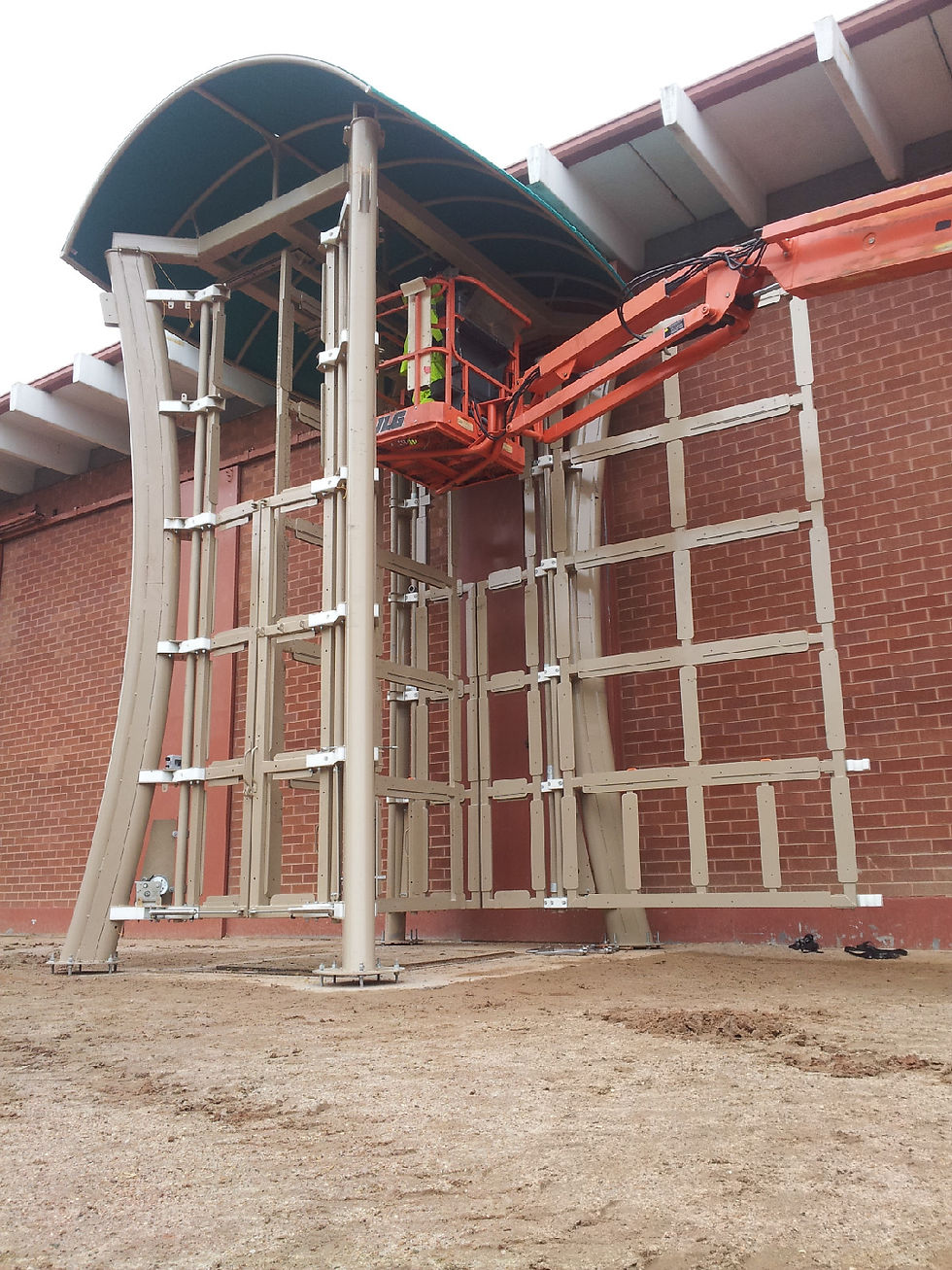
Problems must be viewed as opportunities--opportunities to learn, grow, improve, and adjust in a way that leaves things better off than before the problem existed. The giraffe restraint at the Denver Zoo is one such example where a problem opened the doors to multiple new opportunities.
The problem was that the Zoo had no safe way to contain a giraffe to perform daily healthcare procedures. The singular solution was to design a restraint system, a big box with a single purpose. However, during the research phase of the project opportunities were discovered to incorporate outbound feeding baskets to act as hybrid tree limbs. These feeding arms encourage the giraffes to interact with the restraint through positive reinforcement. This interaction allowed for a rapid acclimation process when the restraint was integrated into the giraffe yard. Today the giraffes are fully comfortable with the restraint and look forward to discovering new eatables each day.
A second opportunity discovered during the project research phase was to incorporate an outer aesthetic. A large metal box would have worked, however large metal boxes aren’t found to often on the African plains. Integrating an aesthetic into the restraint though still artificial was seen as an opportunity to improve or maintain a more natural landscape in the exhibit. The large scale and expressions in form of the restraint also encourages positive interaction between guests and animal care staff. These interactions are opportunities to highlight the unique tools and processes in which the giraffes are cared for.


MECHANICAL SYSTEMS STUDY

CONCEPT DEVELOPMENT